

Violin Size Chart: How to Choose the Right Violin Size for Kids & Adults | Central Music Institute (CMI)

Choosing the correct violin size is one of the most important decisions you'll make before starting violin lessons.
Surprisingly, many beginners—and even parents—assume that buying a larger violin is a smarter investment because a child can "grow into it." In reality, nothing slows progress faster than learning on the wrong-sized instrument.
A violin that is too large can lead to poor posture, unnecessary muscle tension, inaccurate intonation, and frustration during practice. On the other hand, a properly fitted violin allows students to develop healthy technique, confidence, and a genuine love for playing.
At Central Music Institute (CMI), we ensure every student begins their musical journey with an instrument that fits correctly. Whether you're five years old taking your very first lesson or an adult returning to music after years away, choosing the correct violin size is the first step towards long-term success.
Why Choosing the Right Violin Size Matters

Unlike many instruments, violins are available in several different sizes to accommodate players of all ages and body types.
Selecting the right size isn't simply about comfort—it's about developing proper technique from the very beginning.
A correctly fitted violin helps students:
Develop proper posture
Improve intonation and pitch accuracy
Reduce neck and shoulder tension
Build better left-hand technique
Play with greater confidence
Progress faster during lessons
Enjoy practising for longer periods
Many students who believe they "aren't good at violin" are often struggling because they're using an instrument that's simply too large or too small.
Fortunately, that's an easy problem to solve.
How to Measure Violin Size

At Central Music Institute, we use a simple and reliable method that has helped countless students find the perfect fit.
Step 1
Stand naturally with good posture.
Extend your left arm comfortably to the side with your palm facing upwards.
Keep your fingers naturally extended.
Step 2
Using a measuring tape, measure from the base of your neck (near the collarbone) to the centre of your left palm.
Avoid measuring to the fingertips.
Step 3
Compare this measurement with a standard violin size chart.
Although age can provide a general guide, arm length always provides a more accurate measurement.
Standard Violin Size Guide

Generally, violin sizes include:
1/32 Violin
1/16 Violin
1/10 Violin
1/8 Violin
1/4 Violin
1/2 Violin
3/4 Violin
7/8 Violin
Full Size (4/4) Violin
Every student develops differently, which is why two children of the same age may require completely different violin sizes.
Never choose based solely on age.
The Two Simple Tests We Recommend

Measurements provide an excellent starting point, but we always recommend confirming the fit with the actual instrument.
The Scroll Test
Place the violin comfortably on your shoulder.
Reach your left hand towards the scroll.
If your elbow locks completely straight just to reach it, the violin is likely too large.
If your elbow remains tightly bent with plenty of room left, the violin may be too small.
The correct size allows your arm to extend naturally without strain.
The Comfort Test
Hold the violin in playing position for a minute.
Ask yourself:
Are your shoulders relaxed?
Is your neck comfortable?
Does your wrist remain straight?
Can you move your fingers freely?
If you're already uncomfortable before playing a single note, the violin or its setup probably needs adjustment.
Between Two Sizes?

One of the most common questions parents ask is:
"What if my child falls between two violin sizes?"
Our recommendation is almost always the same.
Choose the smaller instrument.
Many parents understandably want to purchase a larger violin so their child can grow into it.
Unfortunately, oversized violins often create poor habits that become difficult to correct later.
A slightly smaller violin encourages healthier posture, better hand position, improved intonation, and greater confidence.
Students can always move up to the next size as they grow.
Should You Buy Before Taking Lessons?

This is one of the biggest mistakes beginners make.
Many families purchase a violin online before ever speaking with a teacher.
At Central Music Institute (CMI), we recommend exactly the opposite.
Begin with a lesson first.
During your initial class, our experienced violin faculty can assess your arm length, posture, shoulder position, and overall comfort before recommending the ideal violin size.
This simple evaluation often prevents expensive purchasing mistakes.
Choosing the right violin is much easier with professional guidance than guessing based on online charts alone.
Violin Sizes for Young Children

Children grow quickly.
A violin that fits perfectly today may become too small within a year.
For younger students, regular measurements are essential.
Parents should also remember that very small violins naturally produce a lighter sound than larger instruments.
This isn't a defect.
Smaller bodies produce smaller resonance.
Comfort and correct technique should always take priority over volume or tone during the earliest learning stages.
Strong foundations lead to beautiful sound later.
Violin Sizes for Adults
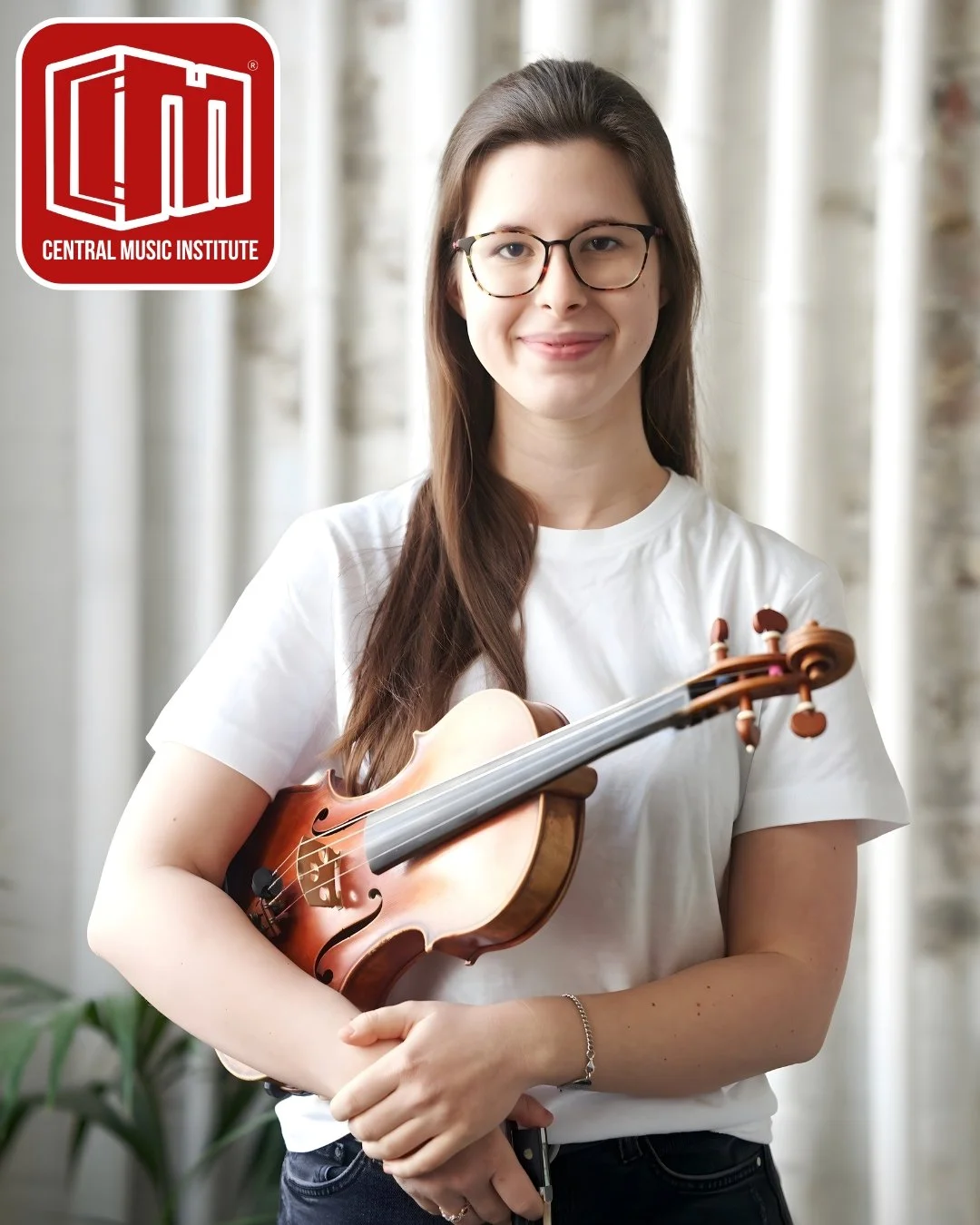
Most adult students play a full-size (4/4) violin.
However, not every adult requires the largest instrument.
Players with shorter arms or smaller frames may feel more comfortable using a 7/8 violin.
There is absolutely no disadvantage in selecting the instrument that fits your body best.
Comfort always produces better technique.
Better technique always produces better music.
Renting vs Buying

Parents often ask whether they should rent or purchase their child's first violin.
For beginners, renting usually provides greater flexibility.
Children often outgrow instruments every few years.
Rental programmes make changing sizes much easier while avoiding unnecessary expenses.
Once students settle into their long-term size and demonstrate consistent commitment, purchasing a higher-quality violin becomes a worthwhile investment.
Common Mistakes to Avoid

After working with students of every age and ability, we've noticed several mistakes repeated time and again.
Buying the Cheapest Instrument Available
Very inexpensive violins often arrive with poor setup, low-quality strings, uncomfortable fingerboards, and improperly fitted bridges.
These issues make learning unnecessarily difficult.
Choosing Size by Age Alone
Age provides only a rough estimate.
Always measure arm length first.
Ignoring Professional Setup
Even an excellent violin performs poorly if it hasn't been properly adjusted.
Bridge height, string action, pegs, soundpost, and chin rest all contribute to comfort and tone.
Buying a Larger Violin to Save Money
This almost always delays progress rather than saving money.
The correct size today is far more valuable than a larger size tomorrow.
Why Professional Guidance Makes a Difference

Choosing the correct violin isn't simply about measurements.
Experienced teachers observe details that measurement charts cannot.
At Central Music Institute, we evaluate:
Playing posture
Shoulder alignment
Hand flexibility
Instrument balance
Comfort while shifting
Overall playing position
Small adjustments to shoulder rests, chin rests, or setup can dramatically improve a student's comfort and confidence.
Learn Violin at Central Music Institute (CMI)

At Central Music Institute, we believe every successful violinist begins with the right foundation.
Our violin programmes combine personalised instruction, internationally inspired teaching methodologies, structured progression, and performance-based learning to help students achieve lasting musical success.
Students benefit from:
Private one-to-one violin lessons
Expert violin faculty
International music examination preparation
Performance opportunities and recitals
Premium learning studios
Professionally maintained instruments for training
Individual attention for every student
Whether you're a complete beginner, an advancing student preparing for international music examinations, or an adult fulfilling a lifelong dream of learning the violin, our faculty provides expert guidance at every stage of your musical journey.
Final Thoughts

Finding the correct violin size is one of the simplest yet most important decisions you'll make as a musician.
A properly fitted violin improves comfort, encourages better posture, develops accurate technique, and makes practising significantly more enjoyable.
Measure carefully, prioritise comfort over size, and don't hesitate to seek professional advice before purchasing an instrument.
At Central Music Institute (CMI), we help every student begin with confidence by ensuring they learn on an instrument that truly fits them. Combined with expert instruction, premium facilities, and internationally recognised teaching standards, the right violin becomes more than an instrument—it becomes the beginning of a lifelong musical journey.
Book a violin assessment and lesson at Central Music Institute today, and let our experienced faculty help you choose the perfect violin size before you buy or rent. The right fit today lays the foundation for years of confident, enjoyable, and rewarding music-making.

