

Central Music Institute (CMI) | The World's First AI-Driven Music School — Inside the Future of High-Technology Music Education

Central Music Institute (CMI) Makes History
There are moments when an educational institution does more than teach its discipline; it begins to question the very architecture through which that discipline has been taught for generations. Central Music Institute (CMI) is entering such a moment. Its emerging technology vision is rooted in a simple but profoundly ambitious idea: what if the science of learning, the psychology of human development, the precision of artificial intelligence and the intuition of great musicians could be brought together to fundamentally rethink music education?
That question places music education at the intersection of disciplines that have historically operated separately. Musicians and conservatoire-trained educators understand interpretation, technique, repertoire and performance. Psychologists understand motivation, cognition, behaviour, attention and the emotional dimensions of learning. Doctors and neuroscientists study the human brain, motor development, hearing, memory and the physiological mechanisms through which complex skills are acquired. Computer scientists and artificial-intelligence researchers build systems capable of recognising patterns and processing information at extraordinary scale. Educational researchers investigate how knowledge is acquired, retained and transferred. Artists bring creativity, imagination and cultural understanding. Economists, strategists and management thinkers examine how institutions can scale innovation and make it accessible to larger communities.
The future of music education may emerge precisely where these disciplines meet.
CMI's technology pivot is therefore being conceived as considerably more than the introduction of an AI application into a traditional music classroom. The ambition is to develop an increasingly intelligent educational infrastructure in which AI, music pedagogy, psychology, research, performance science, educational technology and human mentorship operate together to assist the development of musicians.
This is the intellectual foundation of CMI's vision of high-technology music education.
It is not simply about teaching music with technology.
It is about asking whether technology can help humanity understand how music is learned at a level of depth, continuity and personalisation that traditional educational systems have never been able to achieve.
A New Scientific Era for Music Education

Music has always been connected to science, even when music education did not explicitly describe itself that way. The musician's development involves memory, auditory perception, motor coordination, pattern recognition, attention, emotional regulation, spatial awareness, physical control and thousands of highly coordinated decisions made in real time.
A violinist is simultaneously controlling posture, bow pressure, intonation, timing and musical interpretation. A pianist is coordinating both hands, reading notation, listening critically, anticipating harmonic movement and shaping phrases. A vocalist is managing breath, resonance, pitch, articulation, physical coordination and emotional expression. A drummer is integrating rhythm, limb independence, timing, anticipation and listening. A composer is working with structure, memory, harmony, mathematics, cultural references and imagination.
These are extraordinarily sophisticated human processes.
For centuries, music education has largely relied upon the accumulated expertise of master musicians to guide them. The next generation of education can potentially add another dimension: the ability to combine that human expertise with scientific observation and computational intelligence.
This is not a speculative idea confined to technology companies. The academic field itself is moving in this direction. The 2026 Oxford Handbook of Artificial Intelligence in Music Education brings together scholarship examining AI through music education, cognitive psychology, human-computer interaction, creativity, ethics, motivation, developmental psychology and human-centred pedagogy.
The significance is enormous.
Music education is beginning to become an interdisciplinary science of learning as much as an artistic discipline.
CMI's ambition is to operate at precisely this intersection.
When the Musician Meets the Scientist

Imagine a future music institution in which a musician is not understood solely through the marks received in an examination or the comments made during a weekly lesson.
Instead, their development is viewed as a complex, evolving learning system.
Their practice patterns can be studied. Their performance development can be documented. Their technical progression can be observed. Their repertoire can be mapped. Their assessment history can be connected. Their strengths and recurring difficulties can become visible over time. Their learning pathway can evolve as their ability changes.
This requires a different kind of institution.
It requires musicians who understand music, researchers who understand evidence, psychologists who understand people, technologists who understand computation and educators who understand pedagogy.
The resulting system is not a machine replacing a teacher.
It is a multidisciplinary intelligence supporting the teacher.
That distinction is central to CMI's vision.
The Intellectual Influence of the World's Leading Universities

The intellectual ecosystem surrounding this transformation draws upon the kind of interdisciplinary thinking associated with institutions such as Harvard University, Stanford University, the Massachusetts Institute of Technology, Princeton University, Yale University, Columbia University, the University of Pennsylvania, University of California institutions, Carnegie Mellon University, Oxford, Cambridge, Juilliard, Berklee College of Music, the Royal College of Music, Eastman School of Music and other leading centres of research, music, science and technology.
Each represents a different intellectual tradition.
Harvard represents an extraordinary breadth of scholarship spanning neuroscience, psychology, computer science, education, medicine, music and the humanities. Stanford has become synonymous with technological innovation, artificial intelligence, human-computer interaction and entrepreneurial research. MIT represents the convergence of computation, engineering, cognitive science and emerging technologies. Carnegie Mellon has built deep expertise across artificial intelligence, robotics, computer science and human-computer interaction. Berklee represents contemporary music, performance, composition, production and creative technology. Juilliard and leading conservatoires represent the highest traditions of performance, interpretation and artistic discipline.
The significance is not that music education should imitate any one of these institutions.
It is that the future requires their different ways of thinking to converge.
Research into music education increasingly demonstrates precisely this interdisciplinary character. Earlier scholarship has described AI in music education as drawing upon music, education, artificial intelligence, cognitive psychology, psychology of music, social psychology, anthropology, philosophy, linguistics, human-computer interaction, mathematics and computer science.
CMI's vision belongs to this new intellectual landscape.
Psychology: Understanding the Human Being Behind the Musician

Artificial intelligence can analyse information, but music education ultimately concerns human beings.
A student can possess extraordinary technical ability and still struggle with confidence. Another may progress slowly but develop remarkable long-term musicianship. One student may thrive under competition while another performs better in a supportive environment. Some learners need repetition; others require conceptual explanations. Some are motivated by examinations, others by performance, composition, collaboration or personal expression.
These differences cannot be understood through technical measurement alone.
Psychology therefore becomes essential.
The future music institution may increasingly ask not only whether a student played a passage correctly, but what educational environment enables that student to learn most effectively.
How does motivation influence practice?
How does feedback influence confidence?
How does performance anxiety affect musical execution?
How does repetition influence memory?
How does age influence learning pathways?
How can students develop resilience when progress becomes difficult?
These are psychological questions as much as musical ones.
And this is why CMI's vision of AI-driven education becomes substantially more sophisticated when psychology and learning science are placed alongside technology.
The objective is not simply to create an intelligent machine.
It is to create a more intelligent learning environment.
Doctors, Neuroscientists and the Biology of Musical Learning

The human body is the first musical instrument.
Every musical performance depends upon the brain and nervous system coordinating perception, movement, memory and anticipation. The development of an instrumentalist involves extraordinarily precise motor patterns that become increasingly refined through repetition and feedback.
The implications for education are profound.
A future-oriented music institution can no longer think exclusively about notes, scales and repertoire. It can increasingly consider the science of practice, motor learning, fatigue, concentration, hearing, posture, movement and sustainable musicianship.
This is where medicine, neuroscience and performance science can intersect with music education.
The goal is not to medicalise music.
It is to understand the musician more completely.
If technology can help educators understand how practice affects performance, how repetition influences development and where students consistently encounter difficulty, then education can potentially become more precise while remaining deeply human.
This is one of the reasons interdisciplinary research matters so profoundly to the future of music.
The musician is simultaneously an artist, a learner, a biological organism and a highly complex information-processing system.
A genuinely advanced music education institution must be capable of seeing all four dimensions.
Artists and Researchers Working Together

Technology alone cannot create great art.
The history of music demonstrates that innovation often emerges when artists challenge established conventions. New instruments create new possibilities. New recording technologies change composition. New production tools create new genres. New forms of distribution transform musical culture.
Artificial intelligence is now becoming another creative medium.
The question is therefore not whether AI should enter music education.
It already has.
The more important question is how artists should be taught to think with it without becoming dependent upon it.
Current scholarship is already examining precisely this balance. The 2026 Oxford Handbook discusses AI-assisted creativity, composition, motivation, ethics, authorship, copyright and the preservation of human-centred music-making. Researchers emphasise both the creative potential of AI and the risks of overdependence, loss of judgement and erosion of artistic agency.
CMI's opportunity is to approach this transformation from the perspective of the musician.
AI should become another instrument of exploration.
But the artist remains the author of intention.
From Artificial Intelligence to Augmented Human Intelligence

The most important phrase in CMI's technology philosophy may ultimately be augmented human intelligence.
The objective is not to build a machine that knows more music than a musician.
The objective is to give the musician and educator access to information that would otherwise be impossible to process at scale.
A teacher may hear hundreds of performances across a career. An intelligent system can potentially analyse thousands of performance records.
A teacher may remember a student's progress across years. A digital learning environment can preserve a longitudinal record.
A teacher may identify recurring problems intuitively. An analytical system can potentially identify patterns across many observations.
The machine can process.
The human can interpret.
The musician can create.
This creates a new educational triangle.
Artificial intelligence provides computational intelligence.
The educator provides pedagogical intelligence.
The artist provides creative intelligence.
The future emerges when all three work together.
The Fully Automated Educational Infrastructure

CMI's most ambitious proposition is the development of an increasingly automated AI-assisted infrastructure surrounding the entire learning journey.
Automation in this context should not be understood as eliminating the human teacher. It means automating the processes that can be automated so that human educators can devote more attention to the aspects of music education that require judgement, empathy, interpretation and creativity.
A sophisticated system could potentially collect and organise learning information, maintain progress records, assist with assessments, identify patterns, recommend practice priorities, support personalised curriculum pathways and provide educators with a more comprehensive picture of each student's development.
The system becomes active between lessons rather than disappearing when the teacher leaves the room.
This could fundamentally change the rhythm of music education.
The student practises.
The system learns.
The teacher reviews.
The curriculum adapts.
The student performs again.
The system compares.
The teacher interprets.
The musician develops.
Over time, the educational environment becomes increasingly responsive.
That is the deeper meaning of automation.
Not fewer humans.
Better-informed humans.
A Music Education Operating System

At sufficient scale, this technology begins to resemble something larger than an application.
It becomes an educational operating system.
An operating system for music learning could potentially connect the student, teacher, curriculum, practice environment, assessment framework, performance record, digital portfolio and global learning community into a single ecosystem.
The student would not encounter separate technologies for separate tasks.
The educational environment itself would become connected.
A performance could inform the next lesson.
The next lesson could inform the practice plan.
The practice plan could influence the next assessment.
The assessment could update the student's developmental profile.
The developmental profile could influence future curriculum recommendations.
The entire process becomes continuous.
This is the direction in which CMI's technology pivot becomes truly transformational.
Beyond One Instrument, One Teacher or One Country

The system also has the potential to transcend individual instruments.
Piano education has different technical requirements from violin education. Vocal training differs from percussion. Composition differs from instrumental performance. Music production differs from classical repertoire.
Yet beneath these disciplines are shared principles: listening, rhythm, memory, practice, creativity, performance, feedback, progression and reflection.
An intelligent educational infrastructure can potentially recognise both the differences and the connections.
The same philosophy could therefore extend across piano, guitar, violin, drums, vocals, orchestral instruments, Indian classical traditions, Western classical music, contemporary music, composition, ensemble performance, production and emerging forms of digital musicianship.
And because technology is inherently scalable, the geographical boundary becomes less important.
The ultimate vision is not an AI music school for one city.
It is a global architecture for intelligent music learning.
From Harvard-Level Thinking to Conservatoire-Level Musicianship
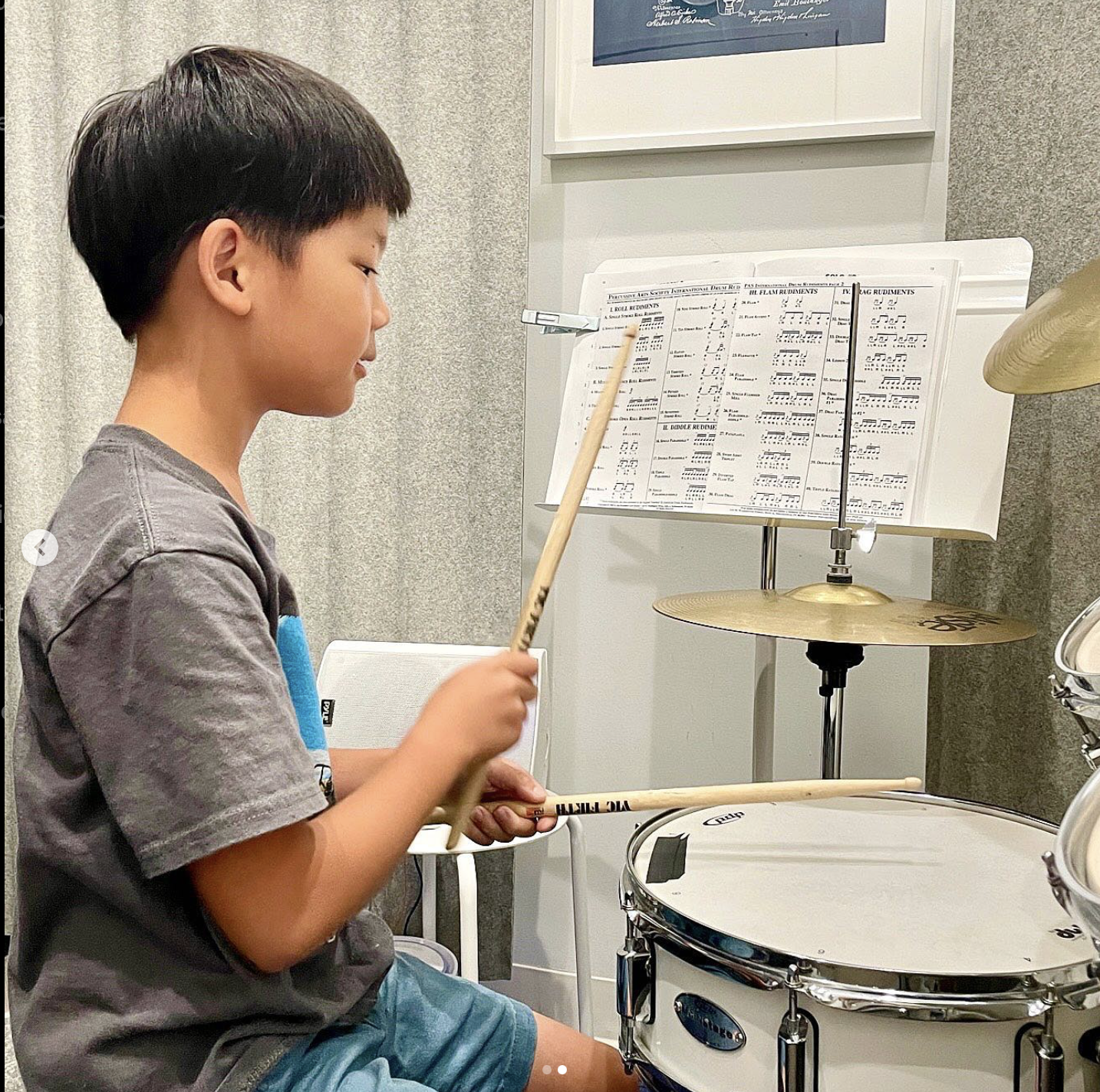
The most powerful model may be the convergence of two worlds that are often separated.
On one side is advanced scientific and technological research.
On the other is centuries of accumulated musical knowledge.
The world's leading research universities have developed extraordinary expertise in artificial intelligence, psychology, neuroscience, education and computational science. The world's leading conservatoires and music institutions have developed extraordinary expertise in musicianship, performance, interpretation and artistic discipline.
The future requires both.
A technically sophisticated AI system without musical understanding will not produce meaningful music education.
A magnificent musical tradition without technological evolution may struggle to address the scale and complexity of tomorrow's learners.
The opportunity lies between them.
Science can help us understand learning.
Technology can help us scale intelligence.
Psychology can help us understand the learner.
Medicine and neuroscience can help us understand the human instrument.
Artists can protect creativity.
Teachers can transform information into education.
That is the interdisciplinary model CMI is working towards.
The Research Institution Within the Music School

This ultimately suggests a profound evolution in what a music institute itself can become.
The institution of the future may simultaneously function as a school, conservatoire, research environment, creative laboratory and technology platform.
Students learn there.
Teachers teach there.
Researchers investigate there.
Artists create there.
Technologists develop there.
Data informs improvement there.
New pedagogies are tested there.
The campus becomes a living laboratory for understanding musical development.
This is particularly important because technology in education cannot simply be purchased. It has to be studied, tested, refined and continually evaluated.
The most sophisticated institutions will therefore not ask merely, "What AI tool should we buy?"
They will ask:
"What should an intelligent music education system actually understand?"
That is a much more consequential question.
The Ethics of Building the Future

With such ambition comes responsibility.
The future of AI-driven music education must be built around privacy, transparency, fairness, accessibility, intellectual property, student agency and human judgement. These are not secondary considerations. They are foundational.
The latest Oxford research on AI in music education specifically identifies data privacy, bias, equity, transparency, academic integrity, copyright, dependency, teacher agency, accessibility and student voice as central ethical questions.
This is precisely why CMI's vision must be grounded in human-centred education.
The purpose of collecting educational information should be to help the student.
The purpose of AI should be to support learning.
The purpose of automation should be to remove unnecessary friction.
The purpose of technology should be to expand opportunity.
And the purpose of innovation should ultimately remain the same as it has always been:
to help human beings realise their potential.
A Global Experiment in What Music Education Could Become

Central Music Institute's technology pivot can therefore be understood as something much larger than a product launch or digital transformation.
It is an educational experiment.
What happens when musicians and educators work alongside AI researchers?
What happens when psychology informs curriculum design?
What happens when performance science informs practice?
What happens when digital systems continuously document development?
What happens when artificial intelligence assists teachers rather than attempting to replace them?
What happens when the world's musical traditions become connected through a global digital infrastructure?
These questions have implications far beyond one institution.
They concern the future of music education itself.
And they are questions that will increasingly be explored by universities, conservatoires, researchers, technology companies, artists and educators around the world.
CMI's ambition is to be among the institutions actively building that future.
Central Music Institute Makes History

Central Music Institute is entering an era in which the boundaries between music, science, psychology, medicine, education, technology and artificial intelligence are becoming increasingly fluid.
The institution's vision is to bring these worlds together in service of one extraordinary human pursuit: learning music better.
The scientist contributes curiosity.
The psychologist contributes an understanding of the human mind.
The doctor and neuroscientist contribute knowledge of the body and brain.
The computer scientist contributes computational intelligence.
The AI researcher contributes machine learning.
The educational researcher contributes learning science.
The artist contributes imagination.
The musician contributes expression.
The teacher contributes wisdom.
And the student remains at the centre.
That is the future CMI is working towards.
Not a world in which machines replace musicians, but one in which the greatest capabilities of technology are placed behind the greatest capabilities of human beings.
Not an institution where AI teaches instead of people, but an institution where AI, educators, researchers and artists collectively create a more intelligent environment for human learning.
And not merely a technologically advanced music school, but a new kind of educational institution—one capable of continuously researching, learning, adapting and evolving alongside the musicians it serves.
The world's leading universities have spent decades demonstrating what happens when disciplines collide: computer science meets psychology, engineering meets medicine, business meets technology, music meets computation, and education meets cognitive science. Contemporary scholarship in AI and music education is now formalising precisely this interdisciplinary convergence.
CMI's ambition is to bring that spirit of interdisciplinary innovation into the architecture of music education itself.
The ultimate innovation is therefore not artificial intelligence.
It is human intelligence, amplified.
And if the next century of music education is going to be defined by the collaboration of artists, educators, scientists, psychologists, researchers and intelligent machines, Central Music Institute is positioning itself to participate in one of the most consequential transformations the discipline has ever witnessed.
The future of music education will not simply be taught.
It will be researched, engineered, personalised, measured, experienced and continuously reimagined.
And CMI intends to help build it.