Music School in Delhi: How to Choose the Right Music Institute

Choosing a music school in Delhi can appear deceptively simple. Search for “music classes near me,” compare a few fees, look at photographs of classrooms and choose the academy with the most convenient timetable. But if music is going to become an important part of your child's development—or your own long-term artistic journey—the decision deserves considerably more thought.
A good music institute should offer far more than weekly lessons. It should provide the right teacher, the right curriculum, quality instruments, meaningful performance opportunities, a stimulating environment and a clear pathway for progression. Most importantly, it should help a student develop into a musician rather than simply teaching them how to reproduce songs.
For families exploring the best music schools in Delhi, students looking for serious instrumental training, or adults finally deciding to pursue music, here is what genuinely matters when choosing the right music institute—and why Central Music Institute (CMI) has developed a distinctive proposition in New Delhi.
Start With the Question: What Do You Actually Want From Music?
Before comparing music schools, determine what you want the education to accomplish.
A five-year-old beginning piano does not need the same programme as a sixteen-year-old preparing for an international music examination. An adult learning guitar for enjoyment has different objectives from an aspiring professional musician interested in composition, performance or music production.
The right music institute should therefore begin with the student rather than forcing every learner into an identical programme.
Ask whether the institute offers beginner, intermediate and advanced music lessons, whether programmes can be adapted to individual goals, and whether students can progress naturally as their interests develop.
At CMI, music programmes are structured for different ages and skill levels, with individual goals forming an important part of the learning process. Its methodology combines structured education with performance, collaboration and progressive musicianship. (Central Music Institute)
Look Beyond the Instrument: Examine the Curriculum
One of the biggest mistakes families make when choosing a music school is focusing exclusively on the instrument.
A student may technically learn piano, guitar, violin or vocals, but serious musical development requires considerably more.
A strong curriculum should incorporate elements such as music theory, rhythm, ear training, sight-reading, repertoire, technique, musical interpretation, improvisation and performance. Depending on the student's ambitions, it may also include composition, songwriting, ensemble playing and music technology.
This is where the distinction between a conventional music class and a comprehensive music institute becomes apparent.
CMI describes its methodology as performance-based, taking students beyond practice rooms towards live performance while developing musicianship, teamwork, adaptability and stage confidence. (Central Music Institute)
The result is an educational philosophy centred on developing the complete musician.
The Teacher Matters More Than the Marketing
A beautiful music school cannot compensate for an ineffective teacher.
When evaluating a music institute, investigate who actually teaches there. Look at their musical education, professional experience, teaching experience and specialist areas. More importantly, consider whether they know how to teach different types of students.
A technically accomplished performer is not automatically an exceptional educator.
Children require patience and age-appropriate pedagogy. Teenagers may require greater technical challenge and artistic direction. Adults often need a different balance between structure and flexibility. Advanced students require teachers capable of identifying subtle technical and interpretative issues.
CMI places considerable emphasis on internationally experienced faculty and personalised mentorship, with its faculty profile referencing educators connected with leading global music institutions. (Central Music Institute)
The principle is simple: the right teacher should not merely demonstrate music; they should understand how to unlock it in someone else.
International Music Examinations Can Be Valuable

If you are considering music education for a child or teenager, ask whether the institute provides a recognised progression pathway.
International examination systems such as Trinity College London, ABRSM, London College of Music, Rockschool and MTB Exams can provide structured benchmarks for students who want measurable academic progression.
Grade examinations can develop discipline, repertoire knowledge, technical ability, sight-reading, aural skills and theoretical understanding. They can also provide formal qualifications that may become useful as part of a student's wider academic and musical portfolio.
CMI's programmes incorporate preparation for internationally recognised examination boards including Trinity, ABRSM, RSL Awards, LCME and MTB Exams. The institute states that 90% of its students achieve Merit or Distinction results in external music examinations. (Central Music Institute)
For students considering music as a serious academic pathway, this kind of structured progression can be considerably more valuable than an informal course with no recognised benchmarks.
Ask About Performance Opportunities
Here is a question every prospective student should ask:
Where will I perform?
Music is a performing art. A student can spend years practising privately and still feel completely unprepared when placed on a stage.
Good music education therefore needs opportunities to perform.
Recitals, student concerts, ensembles, bands, chamber music, masterclasses and showcases teach students how to manage nerves, listen to other musicians, communicate with an audience and recover gracefully from mistakes.
CMI places live performance at the centre of its methodology, with students progressing from individual practice towards collaborative and public performance. (Central Music Institute)
For a child, the first recital can become a defining moment. For an advanced student, repeated performance develops professionalism.
Inspect the Instruments Before You Enrol
This is particularly important for piano, violin, guitar and other acoustic instruments.
A student should have access to instruments that are properly maintained and appropriate to their level. Learning on a poor-quality or badly maintained instrument can make technique unnecessarily difficult and may create misleading feedback about a student's ability.
When visiting a music institute, look at the condition of its pianos, guitars, violins, drums and other instruments. Ask whether instruments are regularly maintained and whether students have opportunities to experience professional-quality equipment.
At CMI, quality instruments form part of the institute's broader educational environment, alongside dedicated learning and performance spaces. (Central Music Institute)
For serious students, this is not simply a luxury. The instrument is part of the education.
The Physical Environment Matters More Than You Think
Music requires concentration.
A student learning a difficult piano passage, developing vocal technique or preparing an ensemble arrangement needs an environment where they can hear accurately, focus comfortably and work without unnecessary distractions.
Look for clean, acoustically appropriate, well-maintained and professionally managed classrooms.
Temperature control is also particularly relevant in Delhi. A serious music institute should be able to provide a comfortable learning environment throughout the year.
CMI's campus in West Punjabi Bagh is positioned as a dedicated music-learning environment with specialised studios and facilities designed around musical development. (Central Music Institute)
The surroundings should make students want to stay, learn and practise.
Technology Should Enhance Music Education—Not Distract From It

Music education is no longer confined to acoustic instruments and printed sheet music.
Modern students encounter digital audio, music production, recording, online collaboration and artificial intelligence throughout the contemporary music industry.
A forward-looking music institute should therefore understand technology while retaining the fundamentals of musicianship.
CMI positions technology as part of its modern educational ecosystem, including online one-to-one education, digital learning and technology-enhanced musical development. (Central Music Institute)
For students interested in contemporary music, this becomes even more important. Someone learning guitar today may eventually want to record an album. A vocalist may become a songwriter. A pianist may become a composer. A drummer may want to record professionally. A teenager fascinated by beats may eventually become a producer.
The best music schools prepare students for that broader musical world.
Look for a Music School With Multiple Disciplines
There is an understated advantage to learning music in an institution where multiple musical disciplines coexist.
Imagine a piano student rehearsing with a vocalist, a guitarist collaborating with a drummer, or a young composer working with violinists and singers.
That is how musicians actually develop.
CMI offers a broad range of programmes including Guitar, Piano, Vocals, Drums, Violin and other instrumental disciplines, alongside ensemble and broader musicianship opportunities. (Central Music Institute)
This creates an environment where students can encounter music beyond the boundaries of their primary instrument.
A pianist learns to accompany.
A guitarist learns to listen.
A vocalist learns to work with a band.
A producer learns what musicians actually need in a recording environment.
The educational value of that ecosystem is considerable.
Don't Ignore Indian Classical Music
Delhi is one of India's most important cultural centres, so a genuinely comprehensive music institute should not treat Indian Classical music as an afterthought.
If your child is interested in Hindustani Classical vocals, Carnatic music or Indian Classical instruments, investigate whether the institute has appropriate specialist teachers and structured programmes.
Likewise, students interested in Western Classical music should look for teachers capable of providing proper technical and stylistic foundations rather than simply teaching popular songs.
The ideal environment allows students to explore both heritage and contemporary music without treating them as mutually exclusive.
Consider Safety, Administration & Student Care

For parents, this deserves as much attention as curriculum and faculty.
Ask how students are supervised, how attendance is managed, who is responsible for children between classes, how communication with parents works and whether the institute maintains clear administrative procedures.
A premium music education experience should feel organised from the moment a student walks through the door.
Safety, cleanliness, professional administration and responsible student management are not optional extras. They are fundamental components of a quality educational environment.
Evaluate the Community, Not Just the Classroom

Music is ultimately a social art.
The strongest musicians rarely develop entirely alone. They learn from teachers, collaborators, performers, composers and fellow students.
Look at whether the institute organises concerts, masterclasses, workshops, ensemble programmes, collaborations and other musical activities.
CMI positions its West Punjabi Bagh campus as a cultural and musical community, with pupil concerts, masterclasses, collaborative opportunities and performance experiences forming part of its broader educational philosophy. (Central Music Institute)
A student should leave the lesson with more than homework.
They should leave with curiosity.
What Makes Central Music Institute Different?

Central Music Institute's proposition is built around the idea that music education should be comprehensive.
Rather than treating music as a weekly extracurricular activity, CMI approaches it as a discipline combining education, performance, technology, mentorship, creativity and personal development.
Its programmes accommodate beginners through advanced students, its curriculum incorporates performance and structured progression, and its broader ecosystem allows students to explore different instruments and musical disciplines. (Central Music Institute)
The institute's flagship campus in West Punjabi Bagh, New Delhi provides a dedicated environment for this approach, while its international outlook reflects the increasingly global nature of music education and the contemporary music industry. (Central Music Institute)
The Right Music School Is an Investment in More Than Music
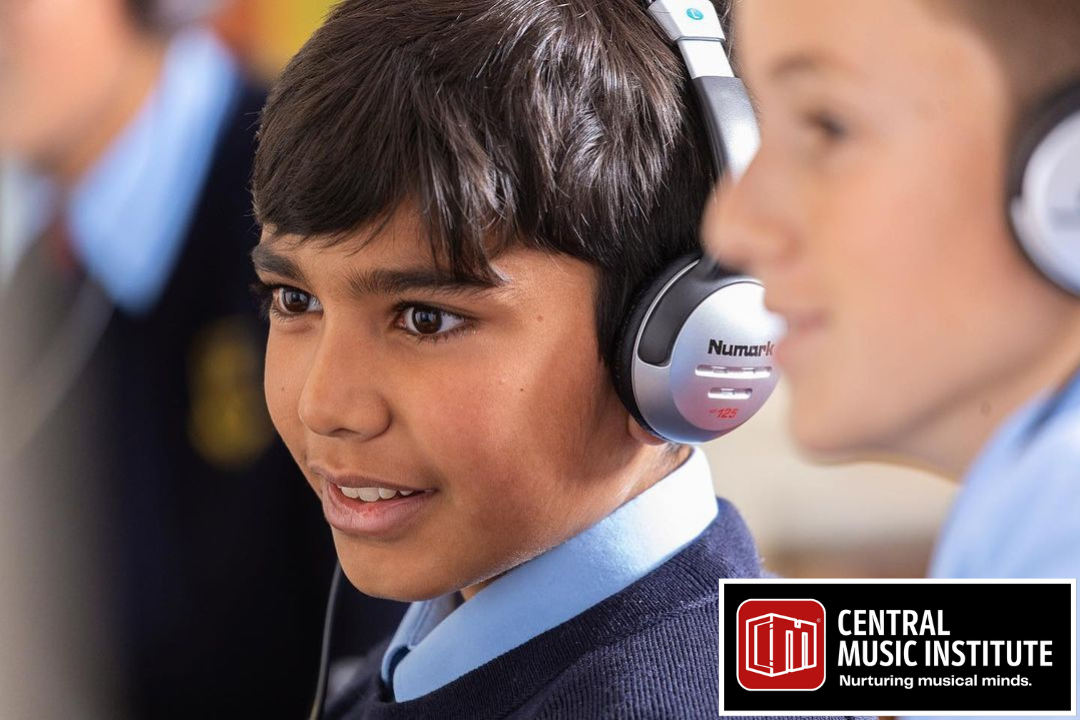
Ultimately, choosing a music institute is not simply about choosing where someone will learn an instrument.
It is about choosing the environment in which they will develop discipline, creativity, confidence, listening ability, patience and the courage to perform.
The right music school should challenge a student without overwhelming them, provide structure without eliminating creativity, and maintain high standards without making music feel joyless.
For parents comparing music schools in Delhi, students searching for music classes in New Delhi, or adults looking for professional music lessons in Delhi, the checklist is therefore straightforward:
Look at the faculty. Examine the curriculum. Ask about examinations. Inspect the instruments. Experience the classrooms. Understand the performance opportunities. Explore the technology. Ask about student safety. And, above everything else, observe how the institute makes you feel about music.
Because the best music institute is not necessarily the one making the loudest claims.
It is the one where you can genuinely imagine yourself—or your child—becoming a better musician.
Central Music Institute: A More Complete Approach to Music Education

For those seeking a sophisticated, structured and globally oriented music institute in Delhi, Central Music Institute offers an environment built around exactly that philosophy.
From piano and guitar to vocals, drums, violin, music theory, ensembles and contemporary music education, CMI brings different dimensions of musicianship together within one institution. (Central Music Institute)
The result is an education designed not merely to teach students how to play, but to help them understand music, perform it, create it and ultimately make it their own.
Central Music Institute (CMI)
West Punjabi Bagh, New Delhi
Choose the institute carefully. The environment in which you learn can shape the musician you eventually become.